
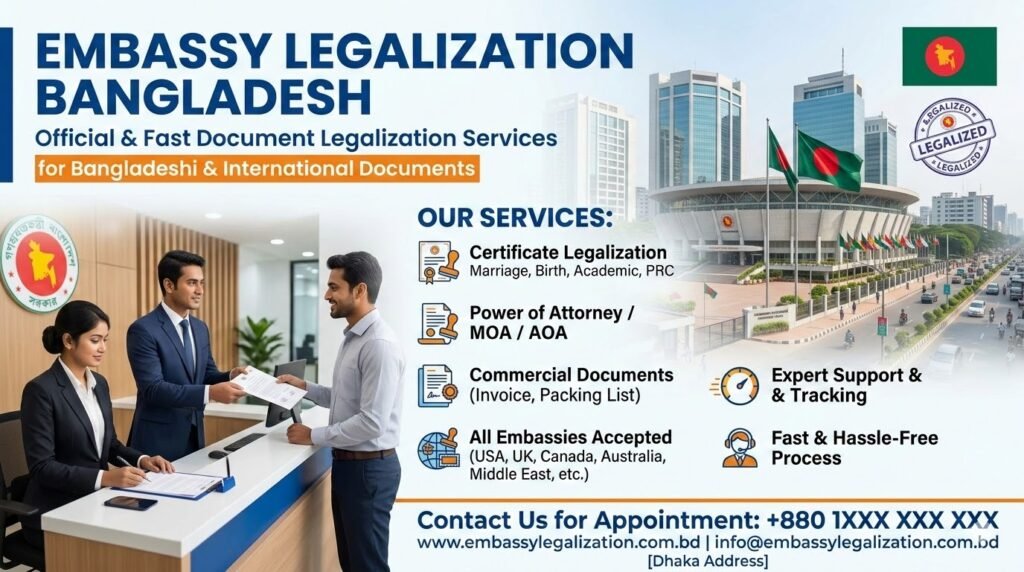
Embassy Legalization Bangladesh is a crucial step when you need to use Bangladeshi documents in another country that is not part of the Apostille Convention. This process verifies the authenticity of documents so that foreign governments, universities, and employers can legally accept them.
If you are planning to study abroad, work overseas, or process immigration, Embassy Legalization Bangladesh ensures your documents are officially recognized.
What is Embassy Legalization Bangladesh?
Embassy Legalization Bangladesh is the process where foreign embassies in Bangladesh verify documents that have already been authenticated by Bangladeshi authorities. This step confirms that the documents are valid for use in the destination country.
Usually, embassy legalization comes after verification from the Ministry of Foreign Affairs (MOFA).
When Embassy Legalization Is Required
Some common scenarios that demand embassy legalization:
- Applying for overseas employment visas (especially Middle East, Gulf, non‑Hague countries)
- Study abroad: University admission, scholarship, transcript verification
- International business setup, company registration abroad, foreign partnerships
- Foreign marriage, visa/residence permit applications
- Immigration, migration, permanent residency, family reunification
- Legal or court matters abroad — e.g. deeds, power of attorney, affidavits
If your destination country does not have a simplified “Apostille” agreement with Bangladesh, embassy legalization remains mandatory.
What Documents Usually Require Embassy Legalization Bangladesh
| Document Type | Examples |
|---|---|
| Educational Certificates | SSC/HSC certificates, University degrees, Transcripts, Diplomas |
| Personal Records | Birth certificates, Marriage certificates, Police clearance, NID / passport copies |
| Commercial & Business Documents | Power of Attorney, Company registration, Trade licenses, Business contracts |
| Legal / Notarial Papers | Affidavits, Court orders, Deeds, Contracts |
Most embassies in countries like UAE, Qatar, Saudi Arabia, Oman, etc., ask for MOFA‑attested documents before they themselves legalize. muscat.mofa.gov.bd+1
Embassy Legalization Process in Bangladesh
Step-by-Step Procedure
- Notary Attestation – Initial verification by a notary public
- Relevant Ministry Verification – Education or Law Ministry verification
- MOFA Attestation – Authentication by the Ministry of Foreign Affairs
- Embassy Legalization – Final verification by the foreign embassy
Following the correct process is essential to avoid rejection.
For legal assistance and document preparation, visit:
🔗 https://ukilbd.com/
Why Embassy Legalization is Important
Embassy legalization ensures your documents are accepted in foreign countries.
Key Benefits
- Confirms document authenticity
- Required for visa and immigration applications
- Needed for foreign employment and higher education
- Ensures international legal validity of documents
Without embassy legalization, many countries will not accept foreign-issued documents.
FAQ – Embassy Legalization Bangladesh
How long does embassy legalization take in Bangladesh?
Processing usually takes 3–7 working days, depending on the embassy and document type.
Is MOFA attestation required before embassy legalization?
Yes. In most cases, MOFA attestation must be completed before embassy verification.
Which documents require embassy legalization?
Personal, educational, and commercial documents intended for international use may require this process.
Can legal professionals help with embassy legalization?
Yes. Legal experts can assist with document preparation, verification, and submission.
Need Help with Embassy Legalization Bangladesh?
If you need to legalize documents for study abroad, immigration, or international business, professional support can make the process faster and easier.